
Log Home Restoration & Repair in Steamboat Springs
Call or text 970-393-6239Photos of your walls welcome · messages returned the same business day
Media blasting, breathable stain systems, chinking, rot repair, and log replacement — plus new log and timber work — by a local, owner-run general contractor, on a written scope before work starts.
Serving Steamboat Springs and the Yampa Valley · Written proposal within 48 hours of your walkthrough · Owner-run · Insured in Colorado — certificate of insurance available on request.
What we do for log homes
A log wall is structure and siding in one — which means when the finish fails, the structure is what starts rotting. Here's the work we do across Steamboat, Stagecoach, Oak Creek, Clark, and Hayden, and for each one, why it matters at this altitude.
💨 Media blasting & surface prep
Corn cob or crushed-glass blasting takes a failed finish back to clean, bare wood — a dry process that drives no water into the logs — followed by sanding for a smooth, stain-ready surface.
Why it matters: stain is only as good as what it grips. Blasting resets the wall so the new system bonds to wood, not to the ghost of the old finish.
🎨 Staining & finish systems
Breathable, penetrating stain systems built for log walls — premium lines like Sashco and Perma-Chink Lifeline — applied as a system, with the recoat cycle planned around your real sun exposure.
Why it matters: at 6,700 feet, UV eats finishes. The south and west walls fail first, so we plan them on a shorter cycle instead of letting them fail on the whole-house schedule.
🧵 Chinking & caulking
Synthetic chinking over proper backer rod, re-chinking failed joints, and energy-seal caulking of the checks and gaps that let wind, water, and heat through a log wall.
Why it matters: a chink joint has to stretch as logs move with the seasons. Two-point adhesion over backer is what lets it flex for years instead of tearing in one winter.
🪚 Rot repair & log replacement
Half-log and face-log replacement, full log-section replacement, epoxy consolidation for minor rot, and borate treatment of bare wood to stop fungus and deter insects.
Why it matters: rot concentrates where water does — the bottom courses, log ends, and crowns. Caught early, it's a repair; ignored, it's structure.
📐 Settling & structural adjustments
Screw-jack adjustments at posts and staircases, freeing bound windows and doors, and correcting the settling issues every log home has built into its first decades.
Why it matters: log walls settle; posts don't. The jacks under your posts were meant to be adjusted — most never have been.
🐜 Insect damage & prevention
Assessment and repair of carpenter ant and wood-boring beetle damage, borate treatment during refinishing, and closing up the moisture problems that invited them in.
Why it matters: insects follow moisture. Fix the water and treat the wood, and the bugs lose interest — spray alone never solves it.
A log exterior shares the rest of the envelope — see Exterior Remodels for the whole system, including weatherproofing and decks built for the same winters.
Why log homes fail at this altitude — and how we stop it
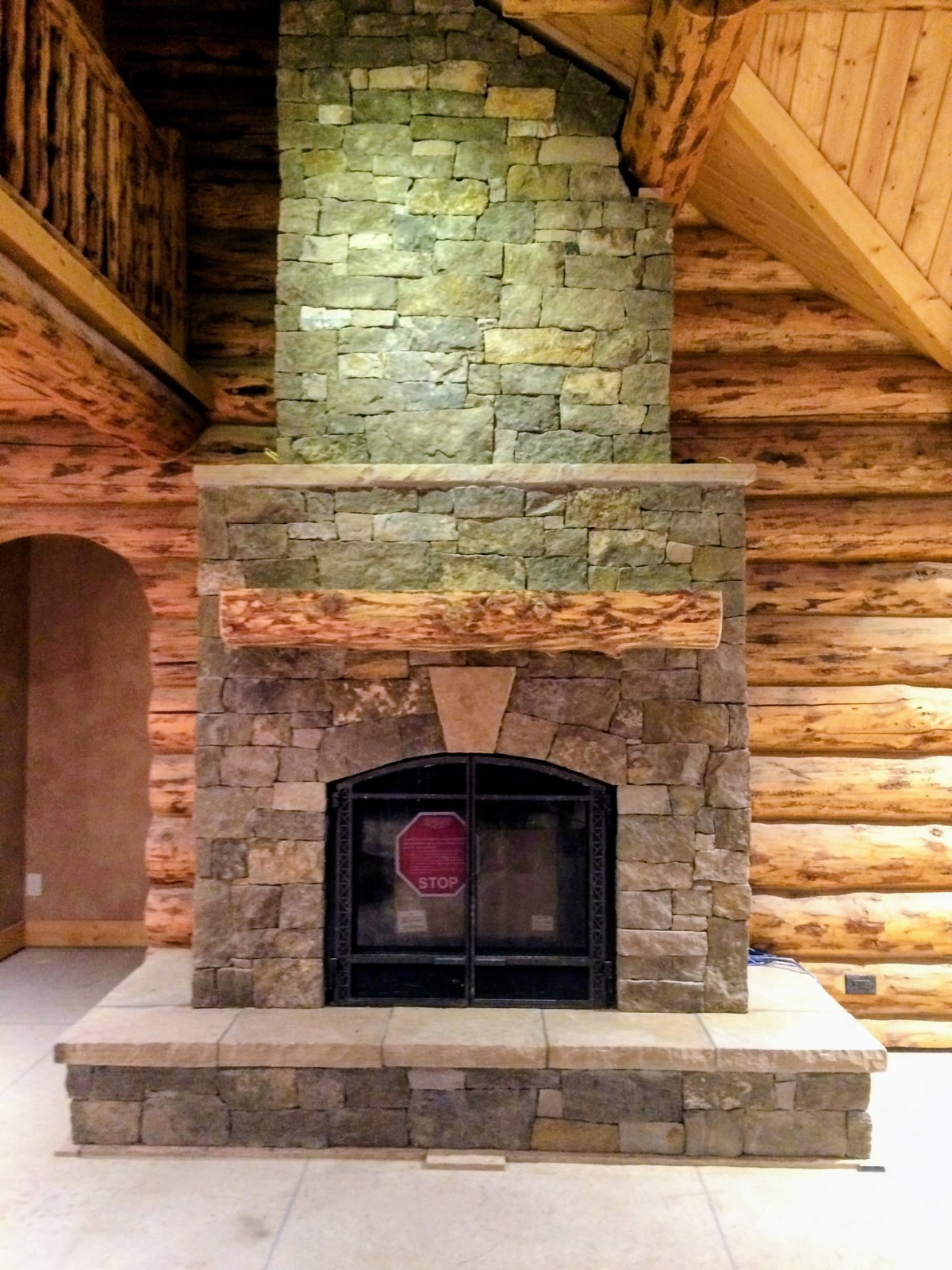
Log home problems here aren't random. They follow the sun, the snow, and gravity — which means they're predictable, and predictable is preventable:
New log & timber construction
The log look doesn't end with old homes. We build new log and timber work three ways — and we'll tell you honestly which one fits your site, budget, and energy goals in Climate Zone 7B.
Hybrid log & timber homes
Log and timber accents — entries, trusses, posts, and feature walls — on a conventionally framed, continuously insulated shell. The mountain look with modern energy performance.
Best when: you want the character without the settling, the drafts, or the compromise on Climate Zone 7B insulation. This is what we recommend most often for new builds.
Log kit erection & completion
Bought a milled log package? We're the local general contractor who takes it from a stack of logs to a finished home — foundation to frost depth, shell assembly, dry-in, and every finish trade.
Best when: a kit maker delivered the logs but the site, foundation, settling details, and finishes need a local general contractor who answers the phone.
Additions to log homes
Adding on to a log home is its own craft — new framing meeting a wall that's still settling, with slip joints, settling gaps, and screw jacks where the two systems meet.
Best when: you love the log home you have and need it bigger — without the addition cracking away from the original as the logs keep moving.
Planning a ground-up build? See New Builds for the full custom-home path, and Framing for the structure underneath it all.
What drives the cost — and how we keep you in control
Most of a log home number comes down to a few things: wall area and height (staging tall gable walls is real work), the condition of the current finish (a sound finish can be cleaned and recoated; a failed one needs blasting back to bare wood), how much repair we find (rot, failed chinking, and insect damage scale the scope), and access and season — remote sites and short summers shape the schedule. A site walk tells us most of it. We put all of it in a written line-item scope, and the price changes only by a change order you approve.
How Elk Ridge cares for log homes
Most log home crews serving Steamboat drive in from somewhere else. We're here — a local, owner-run general contractor, insured in Colorado, who can handle the structural repair and the finish system on the same written scope, and who'll still be here when the south wall wants its recoat in three years. Every project runs the Elk Ridge way: a written line-item scope before work starts, the owner on the job, a photo and status update every week plus a short written recap, and the work backed by a written workmanship warranty, with final payment only after you sign off.
Questions log home owners ask us
How often should a log home be re-stained here?
Can a rotted log be replaced without rebuilding the wall?
Should I paint my log home?
Can you match our existing stain?
What does log home restoration cost?
Do you build new log or timber homes too?
Do you work in Stagecoach, Oak Creek, Clark, and Hayden?
What does the warranty cover?
Your log home has decades left — let's protect them
970-393-6239Written proposal within 48 hours of your walkthrough. Calls and texts answered Monday–Friday, 7am–5pm MT — photos welcome. Messages returned the same business day. You reach us directly — no call center, no obligation.